No Good or Bad Luck? Meiji Jingu’s Omigokoro: Why It’s Called a Letter of Counseling from the Gods
1. The Tourist Who Couldn't Find "Good" or "Bad" Luck at Meiji Jingu
Imagine this scene:
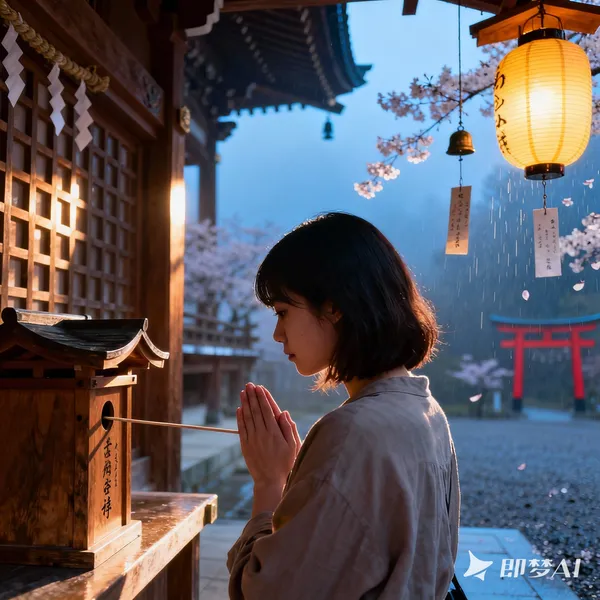
You have finally arrived at the majestic Meiji Jingu Shrine in Tokyo. You pass through the massive wooden Torii gate, purify your hands at the water pavilion, and walk up to the fortune counter with a mix of nervousness and anticipation. You shake the bamboo cylinder vigorously, chanting in your mind: "Big luck, big luck!" (or as the locals say, Dai-kichi!)
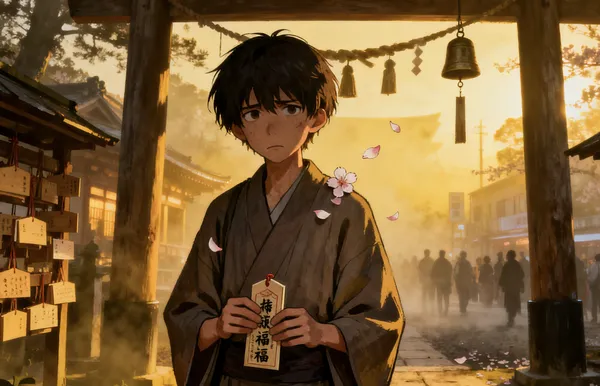
A numbered bamboo stick falls out, and you exchange it for a simple, elegant piece of paper. You frantically scan the paper, looking for that familiar character for "Luck" (吉) or dreading the character for "Curse" (凶).
However, after searching for a while, you freeze. It's not there.
There is no "Great Blessing" (Dai-kichi), no "Small Blessing" (Sho-kichi), and certainly no "Bad Luck" (Kyo).
The paper contains only a beautiful short poem (known as Waka) and an explanation that reads like advice from a wise elder.
At this moment, many first-time visitors panic: "Did I pull a hidden secret version? Or is my destiny so chaotic it can't even be described?"
Don't worry. Actually, what you have just pulled is a breath of fresh air in the world of Japanese fortune-telling and a unique feature of Meiji Jingu Shrine—the "Omigokoro" (Imperial Soul).
2. Why Are There No "Great Blessing" Slips Here?
In our traditional understanding, going to a temple to pull an Omikuji (fortune slip) is usually about "spoiling the plot" of our lives.
- Chinese-style lots (like Guanyin Oracle): These often hit straight at your pain points. You ask about wealth, and they tell you if "a withered tree will meet spring" (success) or if you are "trying to scoop the moon from the water" (futile effort).
- Standard Japanese Omikuji: Although more subtle, they almost always mark a grade on the scale from "Great Blessing" (Dai-kichi) to "Great Curse" (Dai-kyo), telling you whether you should move house or confess your love.
But Meiji Jingu's Omigokoro is an outlier.
Meiji Jingu enshrines Emperor Meiji and Empress Shoken. While this imperial couple was busy modernizing Japan during the Meiji Restoration, they were also incredibly passionate poets. Emperor Meiji wrote approximately 100,000 Waka poems in his lifetime, and Empress Shoken wrote about 30,000.
When Meiji Jingu was designing its fortune-telling system, they decided to abolish traditional fortune divination. They believed that rather than frightening believers with prophecies like "you will have bad luck tomorrow," it was better to select 30 poems with moral significance (15 from the Emperor, 15 from the Empress) from their vast collection to serve as "Spiritual Guidance" for worshippers.
Therefore, Omigokoro translates to "The vast and noble heart of the Kami (Gods)." It isn't telling your fortune; it is writing you a letter.
3. Why It Feels So Accurate: A Session of Divine Counseling
Many people who have pulled an Omigokoro exclaim: "It's so accurate! How did it know I was struggling with this?"
For example, when you are anxious about the "rat race" at work or eager for quick success, you might pull this poem:
"Do not be impatient. In this world, no matter what you do, everything takes time."
When you want to close off your heart because of complicated relationships, you might pull:
"The vast and expansive sky—that is how wide our hearts should be."
From the perspective of folklore and modern psychology, this "accuracy" is not superstition, but a sophisticated "Self-Reflection Mechanism":
- The Rorschach Test Effect: The text of the Omigokoro is usually very grand and abstract (discussing the sky, the human heart, perseverance). Precisely because it is not specific, your subconscious projects your current dilemma onto it.
- Shifting the Locus of Control: Ordinary Omikuji hand the control of fate over to "Luck" (External Locus of Control); Omigokoro hands control back to "You" (Internal Locus of Control). It doesn't predict the future; it teaches you mindset. It tells you: No matter what happens, as long as your heart is sincere, there is no such thing as "Bad Luck."
It's like going to a therapist. They won't directly tell you "you should get a divorce," but will gently ask you: "What kind of life do you actually want to live?"
4. Don't Tie This Fortune to the Tree!
Finally, here is a very important User Guide for your visit.
At most Japanese shrines, if you pull a "Bad Luck" (Kyo) slip, the custom is to tie it to a designated rope or tree branch within the shrine grounds. The meaning is "leave the bad luck here, and let the gods dissolve it for you."
However! For "Omigokoro," please do not do this!
Because the Omigokoro is printed with the Imperial Waka poetry, it is regarded as a sacred teaching. The official advice from Meiji Jingu is: "Please take it home."
- You can: Tuck it into your daily planner or the pocket of your wallet.
- You can: Take it out and read it when you face difficulties or feel mentally overwhelmed.
- You can: Use it as your personal motto for the year.
5. Conclusion
As mentioned at the beginning of the article:
"Life is not a black-and-white opposition of Good Luck and Bad Luck. The Omigokoro is a gentle poem; it won't tell you how much money you will make tomorrow, but it will teach you how to fix your heart in the middle of a storm."
Next time you go to Tokyo, why not visit Meiji Jingu to ask for an Omigokoro? Don't ask for luck, ask for your own heart. Perhaps that thin piece of paper will heal your anxious soul more effectively than a "Great Blessing."
- Article category: 大御心
- Article tags: 无
- Article views: 379 次浏览
- Post date: 2025-12-01 10:04:00
- Article url: https://temple.aitoolbooks.com/dayuxin/113.html